
The Power of Play-Based Learning in Early Childhood Classrooms
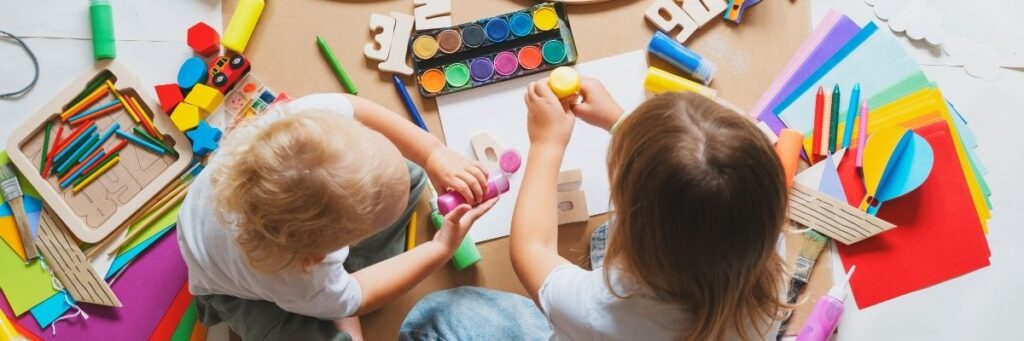
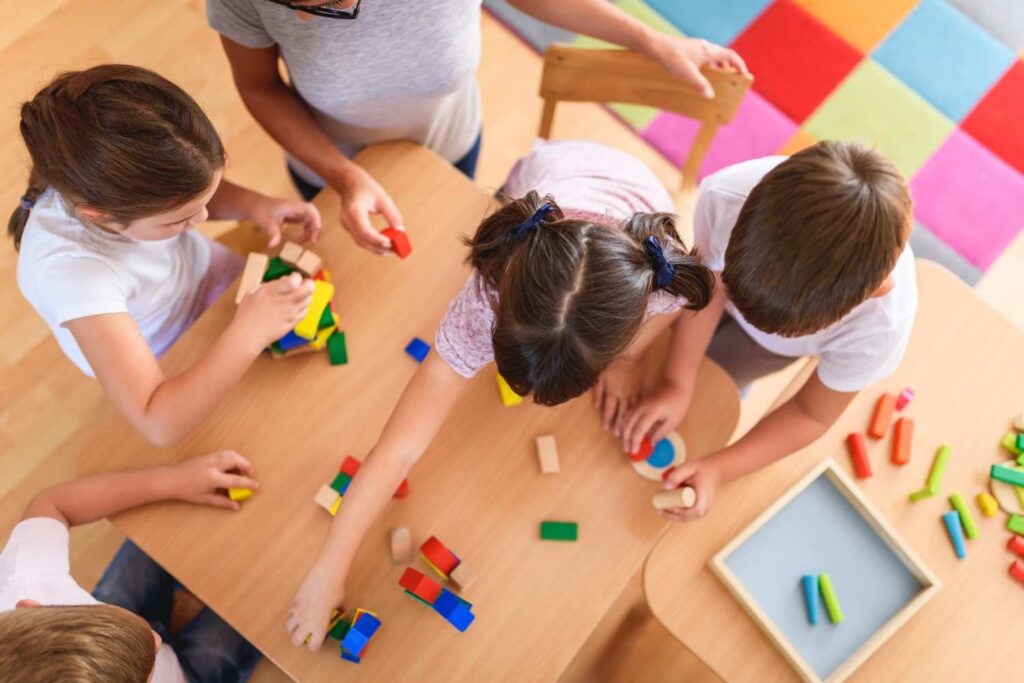
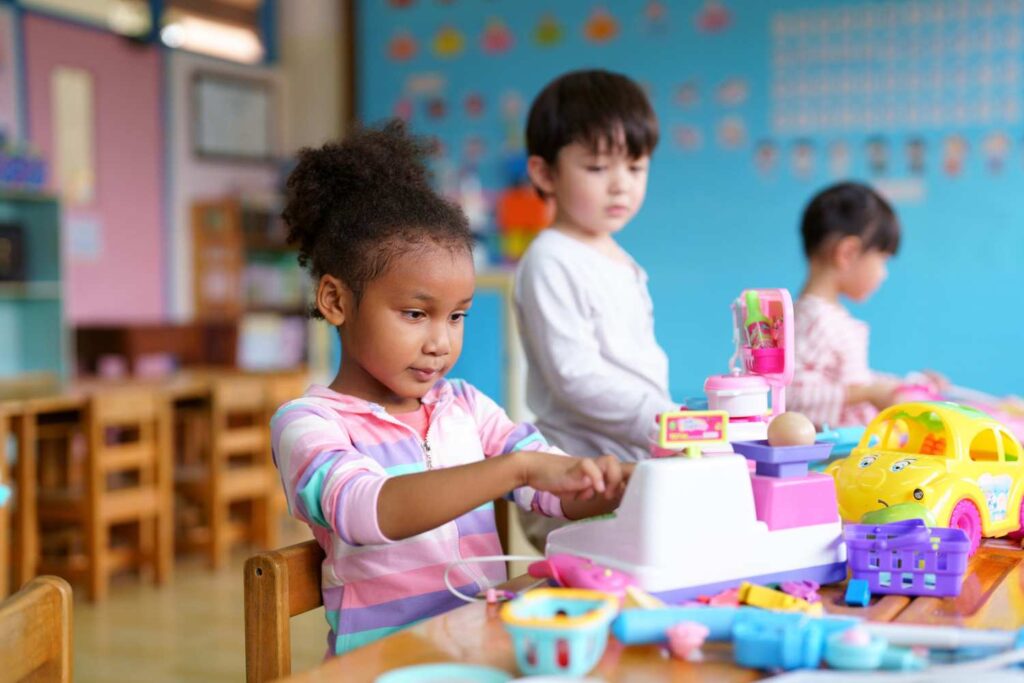
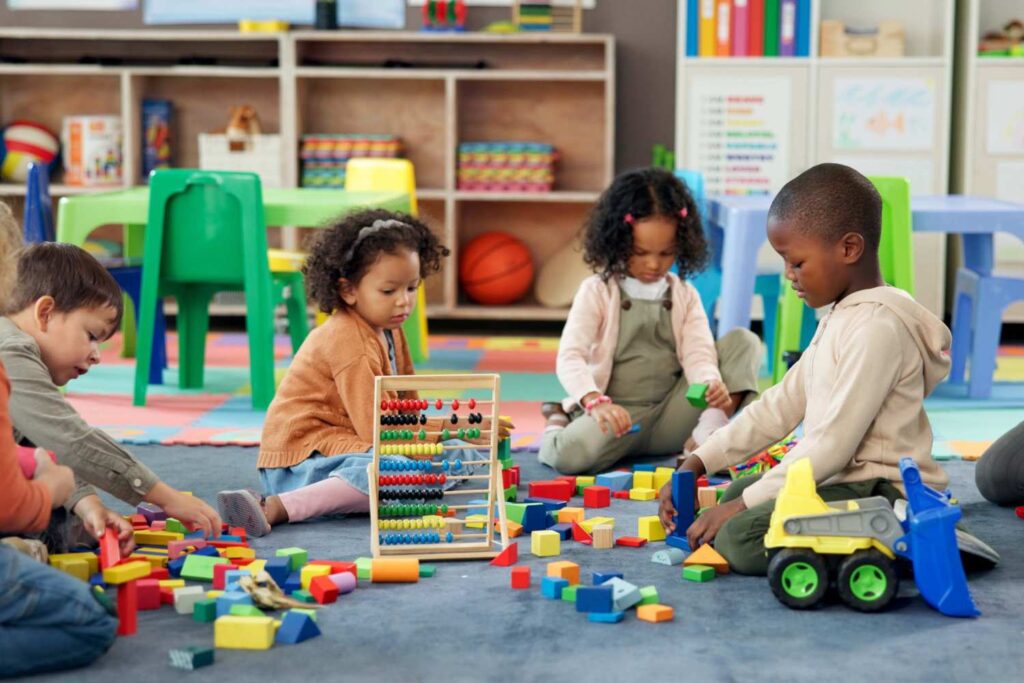
When children build with blocks, pretend to run a store, or create stories with puppets, they are engaging in authentic learning experiences. What seems like “just play” is actually the foundation for developing problem-solving, creativity, and teamwork skills.
In early childhood, play is the real work! Through play, children explore ideas, test possibilities, and make sense of their world. Play-based classrooms are not unstructured or free from academics. Instead, they are thoughtfully crafted environments where curiosity leads the way. Play-based classrooms make learning engaging and meaningful.
The Roots of Play-Based Learning
Play-based learning may sound new, but it has its roots in a tradition that began over two centuries ago. Friedrich Fröbel, a German educator in the 19th century, envisioned childhood as a blossoming garden. He coined the word “kindergarten,” meaning “garden of children.” Fröbel believed that “Play is the highest expression of human development in childhood, for it alone is the free expression of what is in a child’s soul” (Louis & Powell, 2020).
Fröbel emphasized that educating young children means looking at the whole child: physical health, emotional life, cognitive growth, social connections, and even their sense of wonder and inner spirit. Because these elements are intertwined, they must be nurtured together.
At the heart of his philosophy was the belief that children learn best through direct experiences with the world around them; they make sense of their environment by touching, exploring, and interacting with it. His vision of joyful, structured play became the foundation for early programs and spread throughout the world.
Maria Montessori advanced Fröbel’s ideas in the 20th century. In her classrooms, children learned through hands-on exploration with inviting materials. She demonstrated that playful learning can be intentional, independent, and meaningful.
Around the same time, Swiss psychologist Jean Piaget was observing children and discovering that they construct knowledge through their own actions. For Piaget, play was more than entertainment; it was the natural process through which children make sense of their world.
Why a Play-Based Classroom Matters
During the first years of life, the brain forms over a million neural connections each second (Office of Head Start [Head Start], 2025). Play gives children an avenue to explore their surroundings, engage with others, and use their imaginations, which helps form and strengthen these neural connections.
Through play, children develop executive function and social skills, such as problem-solving, creative thinking, collaboration, and communication, which will help them throughout their lives. The research is clear: play is not a time-filler or a fun add-on. It’s an essential early childhood practice to build the cognitive architecture they’ll need for lifelong learning and success.
“Play is not frivolous: it enhances brain structure and function and promotes executive function (ie, the process of learning, rather than the content), which allow us to pursue goals and ignore distractions” (Yogman et al., 2018).
A Focus on the Whole Child
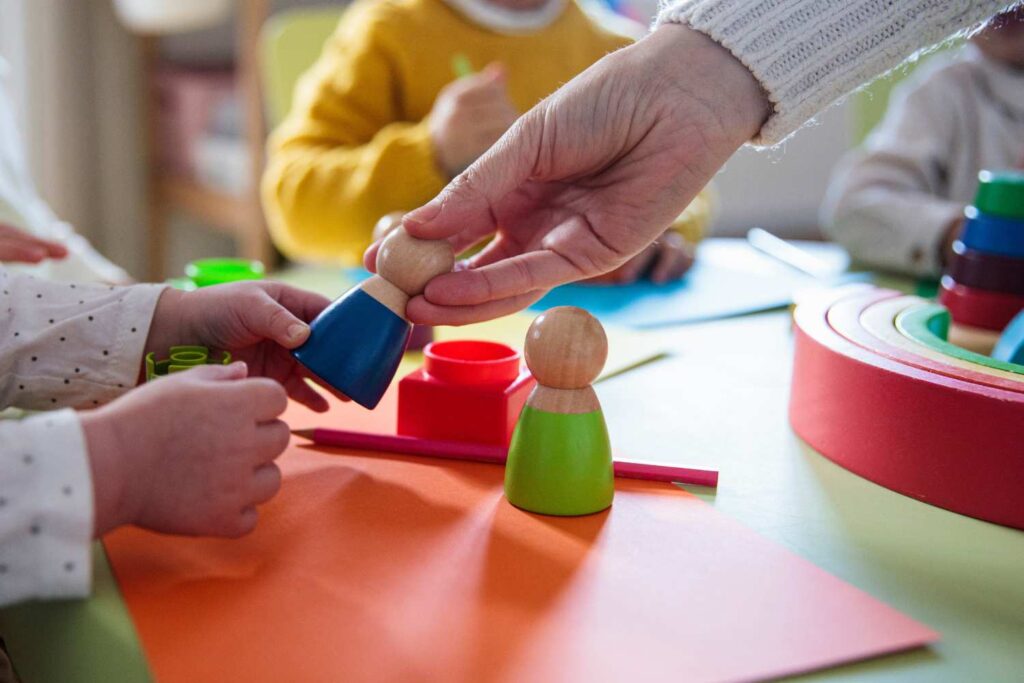
Fröbel’s philosophy for play-based education was that direct experiences and hands-on interaction increase many capabilities of a child. A recent clinical report published by the American Academy of Pediatrics titled: Selecting Appropriate Toys for Young Children in the Digital Era, echoes this philosophy: “Play is essential to development because it contributes to the cognitive, physical, social, and emotional well-being of children and youth” (Healey et al., 2019).
When teachers design early childhood classrooms around play, they are implementing a core pedagogical strategy that supports the development of the whole child.
Key Benefits of Play-Based Learning
Strengthening Cognitive Growth
When children learn through play, they exercise their brains. Each activity presents an opportunity to think, experiment, and create. Tissues can become puppets or doll blankets; stacking blocks teaches balance and cause and effect. Running a pretend bakery involves planning, communication, and quick problem-solving. Play lays the mental foundation for learning.
In an article for Education and Academy, Zain Ahmed writes: “Play-based learning provides children with the freedom to explore their thoughts and ideas in a safe environment. … This imaginative exploration is crucial for problem-solving and critical thinking.” (Ahmed, 2024)
Building Emotional Intelligence
Young children feel deeply, and play gives them a safe outlet for their emotions. Through imagination, they practice real-life challenges in small steps. If disagreements arise, students learn conflict resolution. Dramatic play helps them practice empathy.
These moments help children identify feelings and read social cues. Over time, this leads to better communication, understanding, and trust (Pelly, 2020).
Supporting Physical and Motor Development
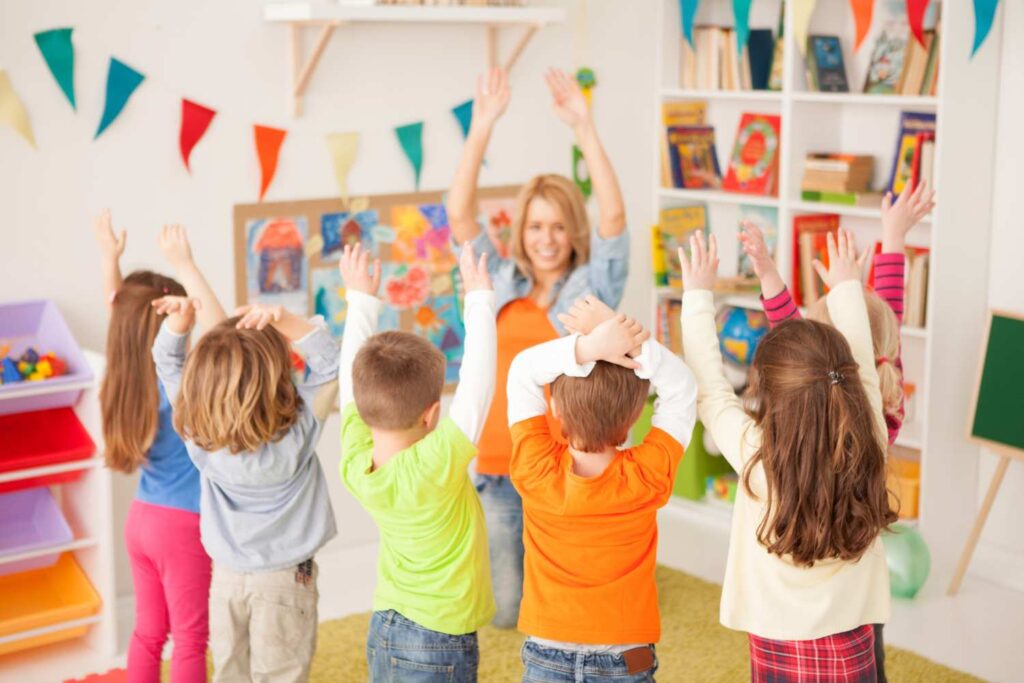
Movement is a child’s first language, and play uses the whole body. Whether skipping or coloring, play helps children develop important gross and fine motor skills.
Outdoor games build coordination, balance, and core strength. Threading beads, cutting shapes, and building with small materials refine hand and finger movements. These skills are essential for writing and performing daily tasks. Play develops the physical abilities children need for structured learning.
Why Schools are Bringing Back Play-Based Learning
Standardized testing has been a central focus in U.S. education since the passage of the No Child Left Behind Act in 2002. While education policy has evolved, the culture of high-stakes testing persists. According to a 2023 EducationWeek survey, 41% of educators reported spending more time preparing students for tests compared to 2018, and nearly 80% reported moderate to large amounts of pressure to ensure strong student performance (Stanford, 2023).
While testing and assessment are important tools, when overemphasized, they can take away from important classroom time for other learning strategies, like play-based learning. According to a policy brief published by Right to Play International: “Play is not merely a pastime for young children, but a powerful tool that is relevant and valuable throughout their lives” (Anderson et al., 2025).
Educators and policymakers are recognizing the importance of play. New Hampshire introduced HB 1499 in 2018 to require play-based standards for kindergarten. Connecticut also mandates each local/regional board of education to provide time for play‑based learning during instructional time for preschool and kindergarten students.
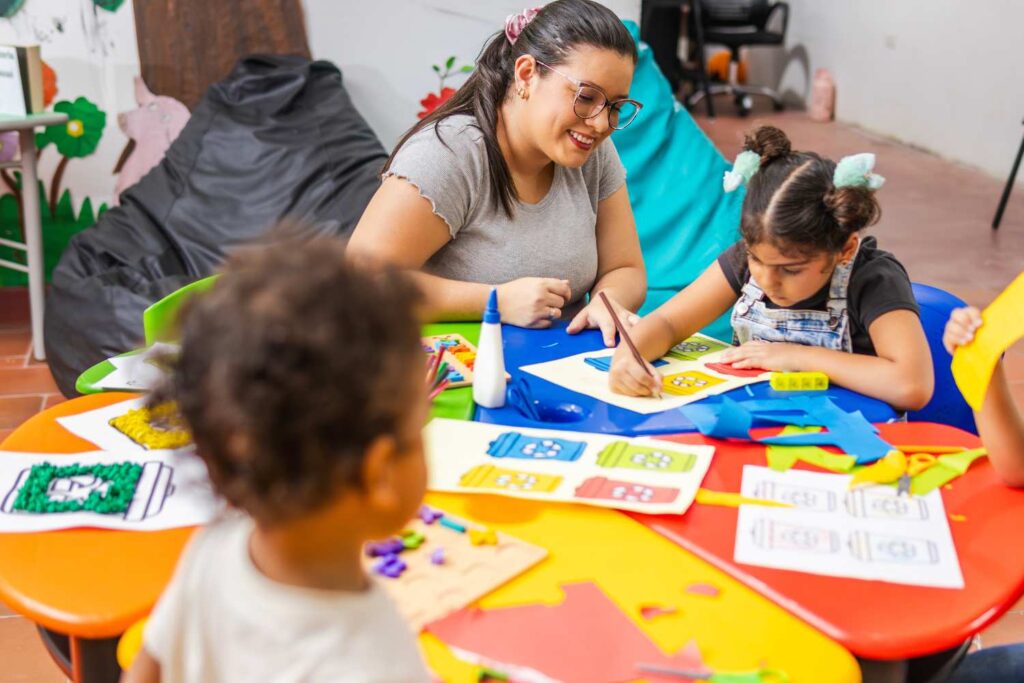
Research shows that play-based learning develops more than academic skills. It builds confidence, flexibility, curiosity, and social understanding while fostering soft skills like communication, collaboration, and perseverance. And perhaps most importantly, it reminds us that learning can — and should — be joyful.
As Fred Rogers said, “Play gives children a chance to practice what they are learning.”
Studies Weekly’s Early Learning curriculum introduces play-based learning into the classroom through engaging activities, games, songs, and opportunities for play that foster foundational skills in literacy, math, and social-emotional development.
Start centering play-based learning today with Studies Weekly.
Social Studies
Standards-aligned lessons that spark curiosity
Studies Weekly Online
Less prep, more impact on students
Health & Wellness
Boost your students’ emotional wellness skills
Science
Encourage students to investigate through hands-on learning
References
Ahmed, Z. (2024, December 17). 6 reasons play-based learning boosts early childhood success. Education And Academy.
Anderson, K., et al. (2025). Policy brief: Accelerating foundational learning through the power of play. Right To Play.
Connecticut Legislative Commissioners’ Office. (2024). Chapter 164 – Educational Opportunities. General Statutes of Connecticut.
Haoyue, W., et al. (2024, August 1). The role of play-based learning in early childhood cognitive development. Zenodo.
Healey, A., et al. (2019). Selecting appropriate toys for young children in the digital era. American Academy of Pediatrics.
Head Start. (2025, June 12). Supporting early brain development: Building the brain. Office of Head Start
Louis, S., & Powell, S. (2020, March). About Friedrich Froebel, who invented “Kindergarten.” Froebel Trust.
Pelly, J. (2020, April 23). What is cooperative play? Definition, examples, and benefits. Healthline.
Shonkoff, J. P., et al. (2025, March 18). The timing and quality of early experiences combine to shape brain architecture. Center on the Developing Child at Harvard University.
Stanford, L. (2023, September 26). Educators feel growing pressure for students to perform well on standardized tests. Education Week.
Uniting. (2025, October 20). The benefits of play-based learning in early childhood. Childcare & Early Learning Centres Victoria & Tasmania.
Yogman, M., et al. (2018). The power of play: A pediatric role in enhancing development in young children. American Academy of Pediatrics.