
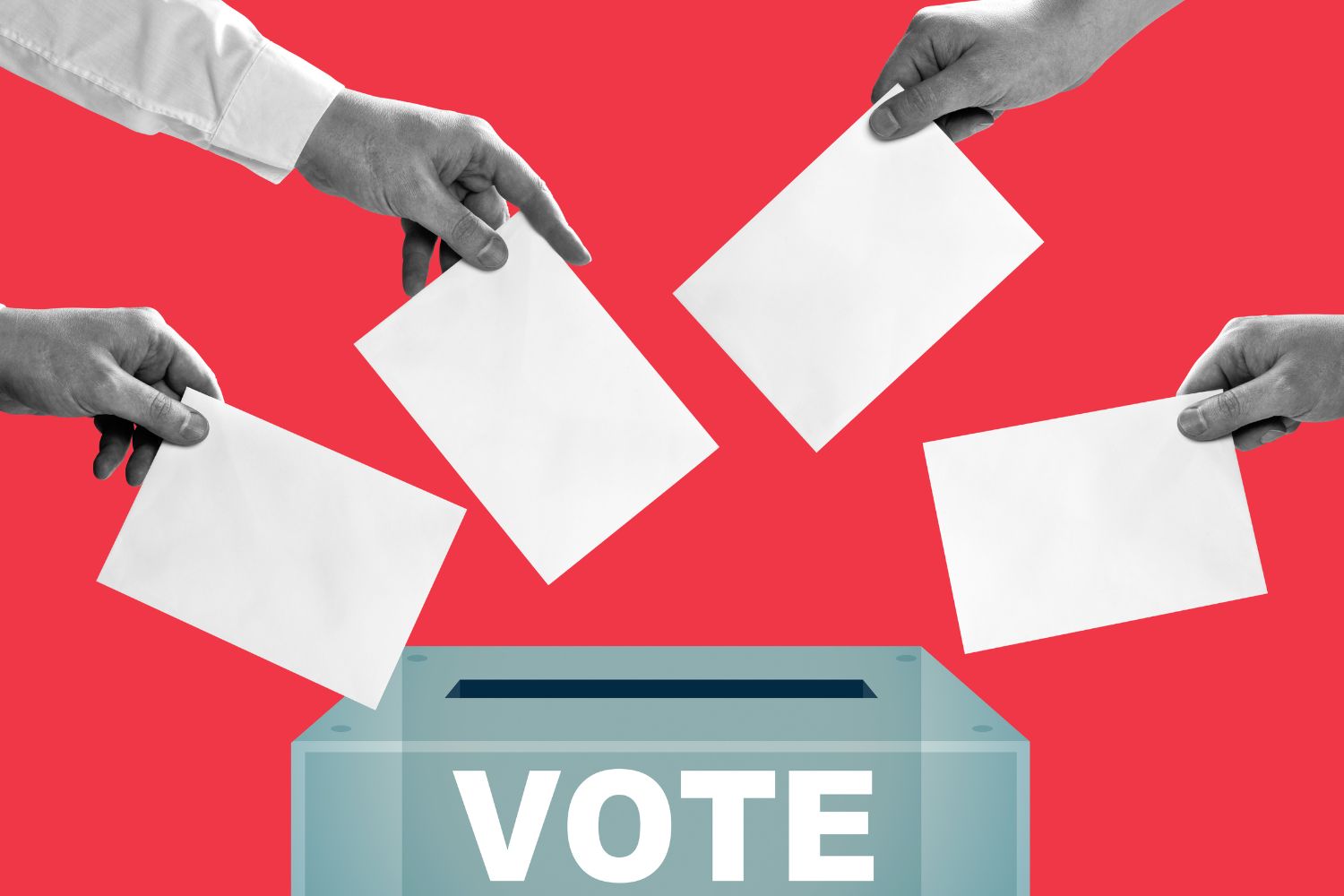
Lesson 11: Election (Grades 4-5)
Updated Oct. 3, 2024 • Studies Weekly
Objective for the Lesson:
Do this lesson after Election Day. Students will continue their learning about the Electoral College.
Student Expectations:
- Fill in an electoral map that reflects the results of the presidential election.
- Interview adults about the reasons for the votes they cast.
- Research how the news media covered the actual election.
- List any issues that arose on Election Day.
Lesson Plan:
- The night before the election, invite students to interview their parents or other adults about Election Day and their voting choices.
- Who did you vote for?
- Why did you vote for that candidate?
- On the day after the election, have students share their responses with the class. Discuss similarities/differences among voting results.
- When the national count is complete, invite students to compare your class results from Lesson 10 with the rest of the community and country.
- Have a class discussion. Have students consider the reasons why different places might have different results (consider: geographic location, urban vs. rural, ethnic/religious makeup of a region, industrial development; location near a university).
- Using newspapers or the internet, find the electoral results for the election.
- Provide students with a blank U.S. political map. Assign students several states each. Students should find out which candidate won the electoral vote in their assigned states and color their maps red/blue respectively.
- Students should keep a tally of electoral votes for each candidate.
- Students should report the results in their states to the rest of the class, who fill in their individual maps accordingly.
- With a partner, have students analyze what they see in the results (potential observations: geographic distribution by party, large state vs. small state results).
- Using local newspapers or the internet, have students research any problems that developed either on Election Day or following the election. (potential ideas: voting machines not working, shortage of ballots, long lines at polling places, contested results). Invite students to list any problems they find and how the issues were resolved.
- Invite students to look at how the election was covered by different media sources and discuss any differences they observe.
Recent Posts
- Teaching Students About Vietnam War Veterans Day March 11, 2026
- Advice for Teachers, From Teachers: You’ve Got This! March 9, 2026
- Calm Classroom Strategies for Spring Testing February 23, 2026
- Blending Social Studies and ELA with Studies Weekly February 13, 2026
- Translanguaging Strategies to Support Texas Emergent Bilinguals February 10, 2026
- Spark Student Curiosity with New Studies Weekly Science February 6, 2026
- Hands-On Science That Reaches Every Learner with Studies Weekly January 30, 2026
- Teaching Kindness in February January 28, 2026
- Interactive Learning Kids Love! | Teacher Testimonial January 20, 2026
- Try These 12 Play-Based Learning Activities January 15, 2026
