
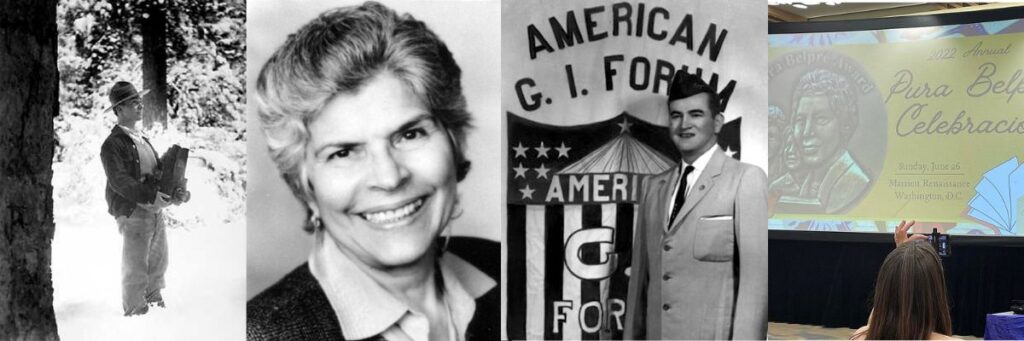
4 Hispanic Role Models in History
Hispanic Heritage Month is a great opportunity to introduce students to inspiring role models who overcame obstacles to make a difference in our culture and society. These four Hispanic role models each used their knowledge, leadership, advocacy, and talents to serve their communities and change the world for the better. Their stories can help your students realize they can make a difference, too.
Dr. Héctor P. García (1914–1996)
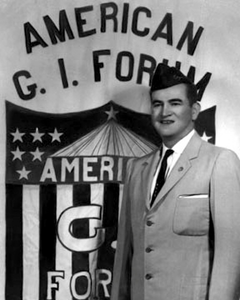
Dr. Héctor P. García, Wiki Commons
Héctor P. García moved from Mexico to the United States when he was a young child. Despite not having a lot of money, his parents emphasized the importance of education and made a way for him to attend medical school.
García earned his medical degree in 1940 at the University of Texas Medical School, which only allowed one Hispanic person to attend per year. After completing his residency training, he volunteered for U.S. Army service during WWII. According to the Texas State Historical Association, he served as an infantry officer, a combat engineer officer, and as a Medical Corps officer and surgeon.
After the war, García joined the League of United Latin American Citizens (LULAC) and became more involved in advocating for civil rights for Hispanic Americans. He became his local chapter’s president in 1947, and helped found the American G.I. Forum, a political organization that helped veterans receive the benefits they had earned through their service. The G.I. Forum eventually expanded its advocacy in other areas to fight for equal rights and desegregation.
In 1984, García became the first Mexican American to receive the Presidential Medal of Freedom. His life reminds us that one person can make a great difference to many.
Pura Belpré (1899–1982)
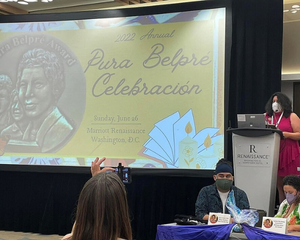
Pura Belpré Celebración, Wiki Commons
In the 1920s, Pura Belpré was a part of a large migration movement from Puerto Rico to the continental United States. According to NYC Public Schools and the Museum of the City of New York, the Puerto Rican population in New York City increased from roughly 7,000 people in 1920 to nearly 45,000 people in 1930. Soon after arriving in New York City, Belpré accepted a job working at the New York Public Library’s 135th Street Branch, becoming the city’s first Puerto Rican librarian.
Belpré quickly noticed that the library didn’t have books that represented the culture of many children in her community, so she began looking for a way to bring Puerto Rican folktales to the library. She enrolled in a storytelling course and wrote the first English version of a Puerto Rican folktale from her childhood: Perez and Martina.
Perez and Martina became the first Puerto Rican folktale published by a major American publisher. For many years, she read Perez and Martina and other Puerto Rican stories to children at the library, often with a mobile puppet theater, to help them learn about and connect with their cultural heritage.
Every year, the American Library Association presents the Pura Belpré Award, an award given to Latino or Latina authors and illustrators who best portray, affirm, or celebrate Latino culture in children’s literature.
Pura Belpré’s example shows students that their languages, family stories, and cultural traditions are worth preserving, celebrating, and sharing.
George Meléndez Wright (1904–1936)
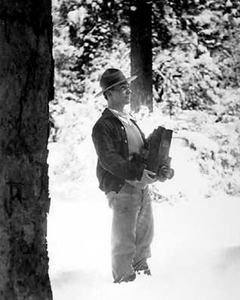
George Meléndez Wright, Wiki Commons
George Meléndez Wright was a Salvadoran-American biologist from San Francisco who grew up studying the wildlife in the hills around the San Francisco Bay Area. His love for nature was evident throughout his life. According to the National Park Service, Wright volunteered as a Boy Scout troop leader, was the president of his high school’s Audubon Club, and later studied forestry at the University of California, Berkeley. During the summers, he even worked for the Sierra Club to guide students through Yosemite National Park.
In 1927, Wright was hired as an assistant park naturalist for Yosemite National Park, becoming the first Hispanic person to hold a professional position in the National Park Service. Wright made many contributions to the park, including helping to develop the Yosemite Museum, but his greatest impact happened when he recognized problems with how wildlife was managed in the park and decided to take action.
Wright planned, led, and even initially funded two massive wildlife surveys across the national parks to study the animals and their behaviors. His field research and recommendations helped the National Park Service find new ways to protect wildlife and led to the creation of a new division focused on wildlife conservation.
His story shows us how we can be proactive to make a difference.
Dr. Helen Rodríguez Trías (1929–2001)
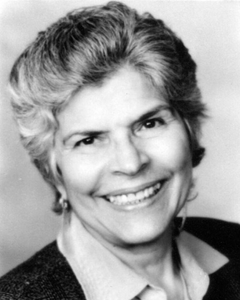
Dr. Helen Rodríguez Trías, Wiki Commons
Helen Rodríguez Trías grew up in Puerto Rico, where she studied medicine and graduated with highest honors in 1960. During her medical residency, she established Puerto Rico’s first newborn care center. According to the National Library of Medicine, the care center helped reduce the hospital’s infant mortality rate by 50% in only three years.
Rodríguez Trías later moved to New York and led several departments in pediatrics and women’s health, and later became the co-director of the Pacific Institute for Women’s Health. Throughout her life and career, she advocated for accessible, equitable healthcare.
To help advance opportunities for women, Rodríguez Trías helped found the Women’s Caucus and the Hispanic Caucus of the American Public Health Association, where she eventually served as the first Latina president.
In 2001, she received the Presidential Citizens Medal for her work. Her life can inspire us to help change the world through compassion and fairness.