

Discover the Instructional Tools Waiting for You in Studies Weekly Online!
Elementary teachers wear a lot of hats! One minute, you’re teaching a lesson on the Constitution; the next, you’re helping a student find a missing assignment, answering a question about the lunch menu, and trying to remember what you planned for tomorrow. When there is so much to do, finding time to search for new activities and instructional ideas can feel like one more thing on an already full to-do list.
But what if some of the resources you need are already waiting for you?
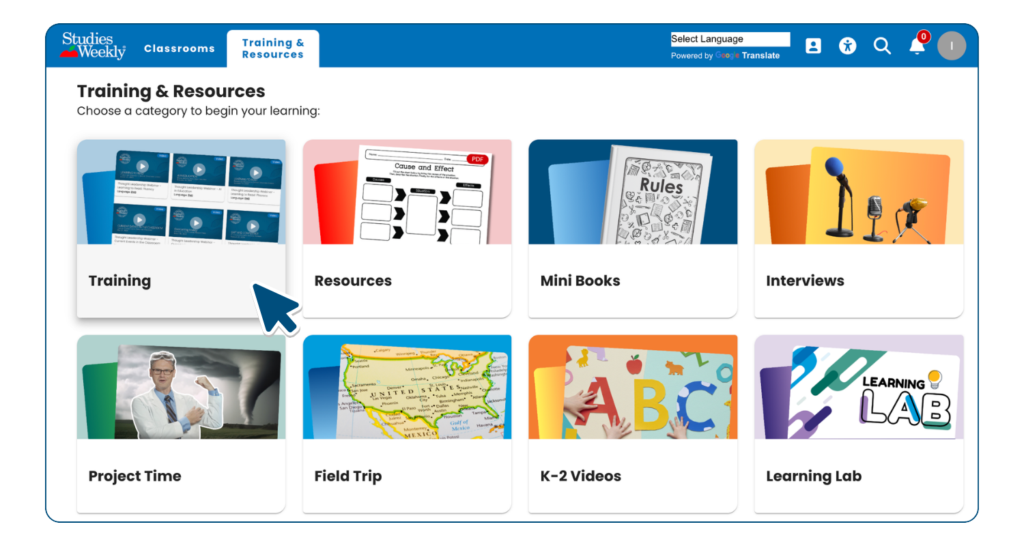
Studies Weekly Online offers more than your weekly publications and digital lessons. The Training and Resources tab houses a collection of implementation resources and instructional tools designed to help you make the most of your curriculum.
Also included are Studies Weekly’s instructional strategy templates. These ready-to-print charts and organizers help students organize their thinking, make connections, and become active participants in their learning.
Let’s explore how these resources can help make lesson planning a little easier and classroom learning even more meaningful!

Start Here: Explore the Training and Resources Tab
Think of the Training and Resources tab as your own little teaching toolbox. Whether you’re looking for a new instructional strategy, a way to help students organize information, or a little inspiration for an upcoming lesson, this is a great place to begin.
Here’s how to find it:
- Log in to your Studies Weekly Online account
- Select the Training and Resources tab
- Choose Resources to explore the available instructional materials
- Browse the categories to find resources that fit your needs
Depending on what you’re looking for, you can explore teaching toolkits, graphic organizers, student artifacts, and other helpful resources. The Training section also offers on-demand training videos to help you become more comfortable using Studies Weekly.
And please remember, you don’t have to explore everything at once! Just knowing it is ready and there for you is such a relief. A tip is to start with one resource that connects to something you’re already teaching. As you do, you will discover new favorites that you can use again and again.
Ready to explore? Visit the Studies Weekly Online Training and Resources guide for more information.
Meet Your New Planning Partner: Instructional Strategy Templates
Have you ever finished teaching a lesson and wished your students had another way to show what they understood? Or perhaps you’ve wanted to encourage more discussion but weren’t sure how to get everyone involved?
That’s where the instructional strategy templates can help! These printable resources offer structured ways for students to think about, discuss, organize, and respond to what they’re learning. They can be used across grade levels and subject areas, making them useful for social studies, science, reading, writing, and more.
The templates include instructions and spaces for student names and dates. You can open the PDFs, print the ones you need, and incorporate them into your existing lessons. Best of all, you don’t have to reinvent the wheel or create a new worksheet every time you want to try something different.
Here are a few ways you can put these tools to work in your elementary classroom!
1. Help Students Compare, Contrast, and Make Connections
Students learn more than facts when they have opportunities to notice similarities, identify differences, and explain how ideas connect.
A comparing-and-contrasting strategy is a wonderful way to help students move beyond simply remembering information and begin thinking more deeply about what they’re learning.
Try it with Studies Weekly:
- Social Studies: Compare the lives of children today with those of children in the past. What has changed? What has stayed the same?
- American history: Compare two important historical figures and explore how their contributions were similar or different.
- Geography: Compare two regions, communities, or landforms.
- Science: Compare the characteristics of two animals, plants, habitats, or states of matter.
For younger learners, begin with pictures, class discussions, and a few shared examples before asking students to complete their own templates. You might even let partners talk through their ideas first. For older elementary students, challenge them to explain why two things are alike or different and support their thinking with details from their Studies Weekly articles. The goal isn’t just to fill in the spaces. It’s to help students make connections that deepen their understanding.

2. Turn Reading into Active Thinking
Reading an article is an important part of learning, but what happens when students pause to reflect on what they’re reading?
Adding a simple thinking strategy can help students become more intentional readers. Instead of racing through an article to find the answers, they begin asking questions, noticing details, and thinking about what the information means.
Try this during your next Studies Weekly reading lesson:
Before reading, ask students what they already know about the topic. As they read, encourage them to look for interesting details, unfamiliar ideas, or information that surprises them. After reading, give them time to share what they learned and what they still wonder about.
You can use an appropriate instructional strategy template or graphic organizer to help students record their thinking. For example, during a unit about important American documents, students might identify what they already know about the Constitution, record new information from their reading, and write questions they’d like to investigate further.
Try this activity to learn about important documents!
This gives students a purpose for reading and creates natural opportunities for discussion. It also helps you see what students understand, what misconceptions may need attention, and which questions could lead to further exploration.
3. Make Student Thinking Visible with Graphic Organizers
Sometimes students have plenty of ideas but need help getting those ideas organized. Graphic organizers provide a visual structure that can make complex information easier to understand.
The Graphic Organizers section of Studies Weekly Online offers another helpful collection of printable tools for organizing information and showing relationships between ideas.
Here are a few classroom possibilities:
- K–2: Draw pictures and add simple labels to show what students learned about a community, animal, or historical figure.
- Grades 3–4: Organize facts about a state, region, historical event, or important person.
- Grades 4–6: Sort information into categories, connect causes and effects, or organize evidence before writing a response.
Imagine your class is learning about communities. Students could organize information about community helpers, the services they provide, and how those services meet people’s needs.
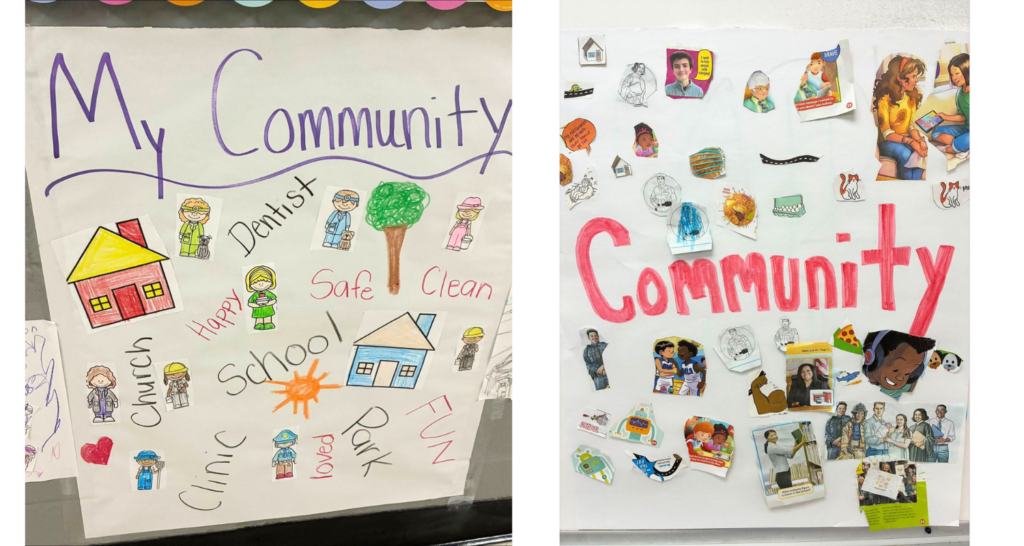
Graphic organizers can also support students who benefit from visual structure, including learners who need help breaking a task into smaller steps.
3. Let Visuals Do Some of the Teaching
Studies Weekly publications include photographs, illustrations, maps, charts, and other visuals that can become powerful differentiation tools.
For example, you could display a photograph before reading a related article and ask:
- What do you see?
- What do you think is going on?
- What do you wonder?
- What do you think this image can tell us?
Students who may struggle with the text can begin building background knowledge and vocabulary through the visual. Students who are ready for more can use the image as a primary source and make inferences about what was happening. A simple photograph can become an important entry point for every learner.
Studies Weekly has a “See, Think, Wonder” resource you can use as a pre-reading strategy, exactly like in the example above. You can find the printable located in the Training & Resources section of Studies Weekly Online.
4. Give Every Student a Way to Participate
One of the wonderful things about Studies Weekly’s instructional strategy templates is that they can offer students different ways to demonstrate understanding.
Some students are eager to share their ideas aloud. Others need time to think, draw, write, or talk with a partner before they’re comfortable contributing. A structured activity can create more opportunities for all students to participate.
For students who need additional support:
- Provide a word bank or a few key vocabulary terms
- Use pictures or examples to introduce the task
- Complete the first section together
- Allow students to explain their thinking orally instead of writing
For students ready for an extra challenge:
- Ask them to support their answers with evidence from the article
- Have them explain connections between ideas
- Invite them to create a new question for classmates
- Encourage them to use their completed organizer to write a summary or short explanation
You can also pair students for collaborative learning. One student might locate information in the article while the other records the group’s thinking, with both contributing to the discussion. The templates are flexible tools. You can adjust them to meet your students where they are and help them take their next step.

5. Extend Learning Beyond the Article
Studies Weekly lessons can become a starting point for conversations, investigations, creative projects, and connections to the world around us. After students read about a topic, use an instructional strategy template to help them reflect on what they’ve learned or prepare for a follow-up activity.
For example:
Citizenship: Have students identify ways people contribute to their communities, then brainstorm actions they can take in their own classroom or school.
Science: Invite students to record observations, identify patterns, or organize evidence from a classroom investigation.
Geography: Have students organize information about a location and then create a map, model, or illustrated travel guide.
Historical Figures: Ask students to organize important facts about a person’s life, contributions, and lasting impact before creating a short biography or classroom display.
Tip: Here’s a historical figures display you can make in your classroom!
This project is a fun way to combine reading, historical thinking, creativity, and student reflection! You can adapt this idea to so many other Studies Weekly topics, too.
These activities help students connect information from their reading to something they can explain, create, discuss, or do. They also provide opportunities to bring together reading, writing, speaking, listening, and content-area learning. The simplest extension can lead to the best classroom conversations!
Teacher Tip: Keep Your Favorite Resources Close at Hand
Once you discover a template that works well for your students, don’t feel like you have to start searching for it from scratch each time. Consider creating a small instructional resource binder or digital folder to keep your favorite templates and a few notes on how you’ve used them.
You might organize your collection by purpose:
- Reading and comprehension
- Comparing and contrasting
- Vocabulary development
- Discussion and reflection
- Research and note-taking
- Science observations
- Writing and summarizing
As you plan each new Studies Weekly unit, take a quick look through your collection. Is there a template that would help students understand the content, organize their ideas, or demonstrate their learning? You can also keep a note of which activities worked particularly well and how you might adapt them next time. Over time, you’ll build a personalized collection of resources that reflects your students’ needs and your own teaching style.

A Little Implementation Support Can Go a Long Way
The Training section on Studies Weekly Online is a fabulous opportunity to continue growing your instructional toolbox. If you’re new to Studies Weekly Online, explore the Training section to learn more about the platform and its features. If you’ve been using Studies Weekly for years, challenge yourself to try one new strategy or resource this month. You might find an idea that saves planning time, a tool that sparks a thoughtful classroom discussion, or a new way to help a student communicate what they’ve learned.
Choose One Tool and Give It a Try!
Teaching is full of decisions, adjustments, and so many moments when we have to think on our feet. Having resources ready to support those moments can make a real difference. And remember, you don’t have to use every resource or try every strategy. The best tools are the ones that serve your students and support the learning goals you’ve set for them.
The Studies Weekly Training and Resources Tab gives you a place to discover ideas, learn new approaches, and find printable tools that complement the lessons you’re already teaching. The instructional strategy templates offer practical ways to help students organize information, make connections, participate in discussions, and take a more active role in their learning.
So, the next time you’re planning a Studies Weekly lesson, choose one template, connect it to something your class is learning, and see where it takes you. You may discover a new favorite teaching tool, and your students may discover a new favorite way to learn!
Happy teaching!
Warmly,
Debbie

Debbie Bagley works as a Studies Weekly Teacher Advocate. Teacher Advocates are former teachers who help teachers like you implement Studies Weekly materials into their instruction. Teacher Advocates are available to provide support through email, phone call, and video chat. Teacher Advocates are only available for classroom teachers currently using Studies Weekly materials. They are not available for homeschools. Schedule a meeting with Debbie here.