

12 Play-Based Learning Activities: Examples of Play-Based Learning in the Classroom
Play-based learning is a teaching strategy that uses children’s natural curiosity by providing hands-on, playful opportunities to investigate concepts, collaborate with others, and deepen understanding. Play is the natural language of children, and is a natural avenue for learning many skills, like collaboration, creativity, problem-solving, and critical thinking.
When we make time for play, we make time for cognitive and social development. Here are 12 meaningful ways to integrate play into learning.
12 Play-Based Learning Activities
Play-Based Social Studies Activities:
- Community Builders Center (1-5): Students design and build a model town using blocks or recycled materials. They assign roles like mayor, mail carrier, or store owner and work together as a community, learning about citizenship and cooperation.
- Living History Museum (3-6): Students research historical figures, create simple costumes, and act out short scenes or interviews. This turns history into a story they can touch and feel.
- Cultural Play Corner (K-6): Students explore traditions, foods, and music from around the world through dramatic play, art, and storytelling. They learn respect for diversity and build empathy.
Play-Based Reading and Literacy Activities:
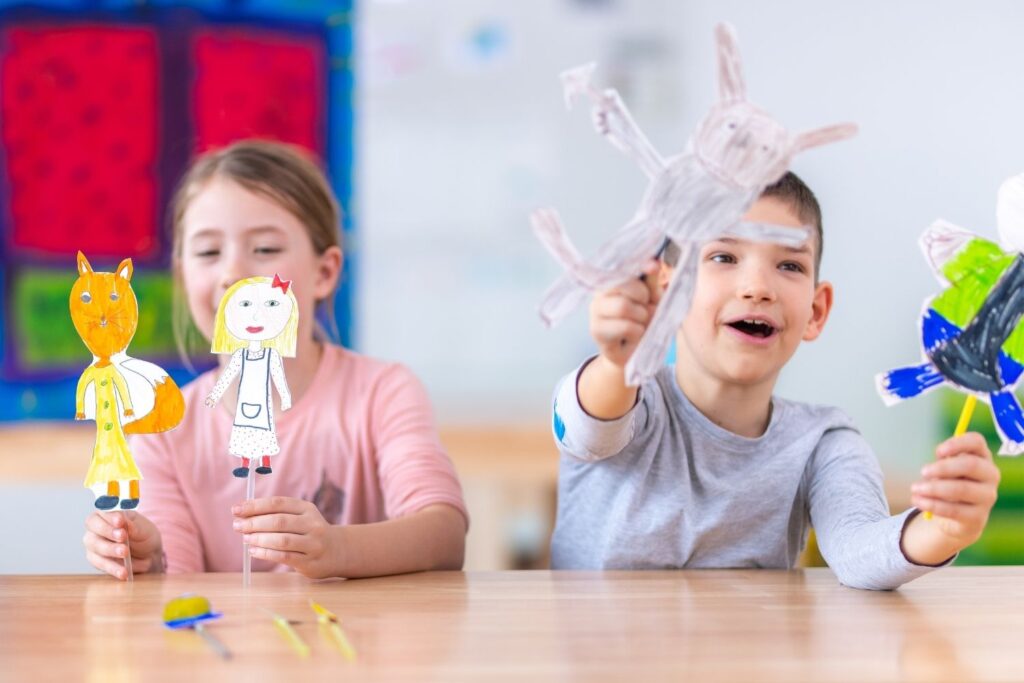
- Storytelling Station (K-6): After reading a favorite book, students use puppets or props to retell the story, building comprehension and sequencing skills.
- Author’s Workshop Pretend Play (K-6): The classroom transforms into an imaginary publishing company. Students act as authors and illustrators, writing books to share with their peers.
- Word Games and Hunts (K-2): Letter blocks, magnetic tiles, and scavenger hunts make phonics practice lively and interactive.
Play-Based Math Activities:
- Classroom Market (K-3): A pretend store allows children to practice counting, adding, and making change using play money. They also begin to grasp basic economics.
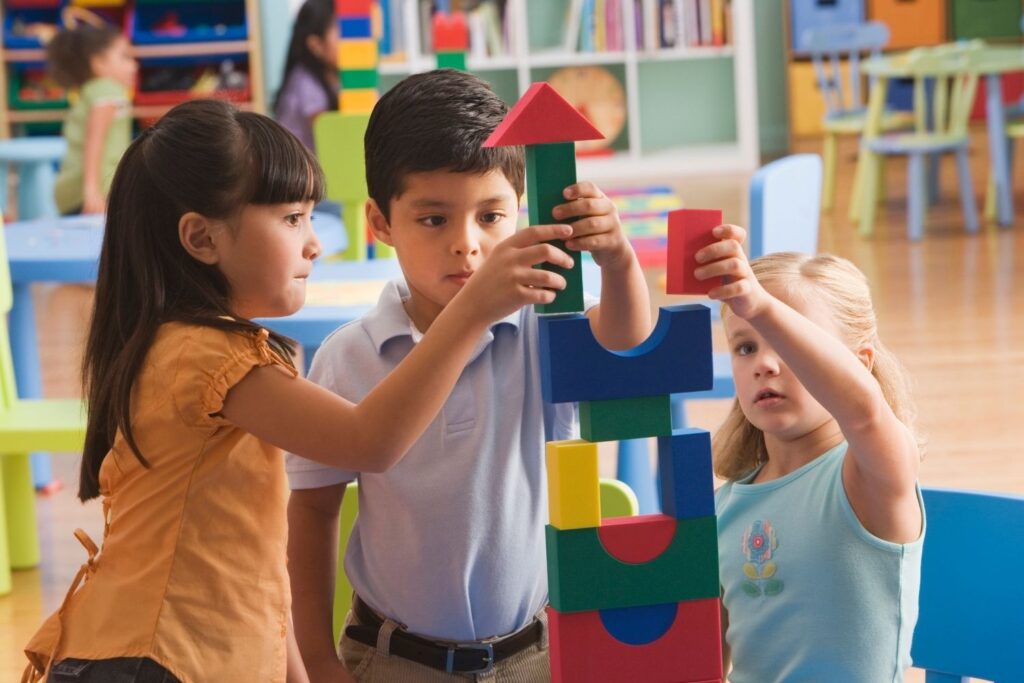
- Engineering Challenges (K-6): Students can tackle design challenges using blocks or building bricks. Ask them to build the tallest tower that won’t tip, or create a bridge strong enough to hold a toy car.
Play-Based STEM and Science Activities:
- Inventor’s Workshop (K-6): Using recyclables and simple tools, children design inventions to solve classroom problems. This supports creativity, design thinking, and collaboration.
- Outdoor Explorers (K-2): Students observe insects, collect leaves, or measure shadows, connecting natural curiosity to scientific investigation.
Play-Based Social Activities:
- Friendship Theater (K-3): Students act out scenarios about kindness, sharing, or resolving conflicts, learning empathy and communication.
- Team Challenges (K-6): Try cooperative games to teach perseverance and teamwork while helping children see the value of others’ ideas.
Creating a Play-Based Classroom
A play-based classroom is an active, hands-on, and purposeful learning environment. It blends exploration with instruction, connecting directly to standards and real-world understanding. Here are some simple strategies to keep play-based learning at the focus of your classroom:
- Rotate materials regularly to spark new interests and extend learning
- Create dedicated play areas with dynamic themes, like kitchens, science labs, and building zones
- Bring the outdoors in (and the indoors out) by incorporating natural elements like water, sand, and wood into learning
- Ensure purposeful play by observing closely, setting up provocations, and responding to each child’s unique learning journey
Bringing It All Together
When we incorporate play into the elementary classroom, we invite joy, curiosity, and imagination back into the learning process. Whether children are pretending to run a town, designing an invention, or acting out a story, they’re building essential skills that prepare them for school and for life.
Let’s give them time to play, explore, and wonder. Because when children play, they aren’t just having fun, they’re growing into thinkers, creators, and citizens of the world.
Warmly,
Debbie
 Debbie Bagley works as a Studies Weekly Teacher Advocate. Teacher Advocates are former teachers who help teachers like you implement Studies Weekly materials into their instruction. Teacher Advocates are available to provide support through email, phone call, and video chat. Teacher Advocates are only available for classroom teachers currently using Studies Weekly materials. They are not available for homeschools. Schedule a meeting with Debbie here.